
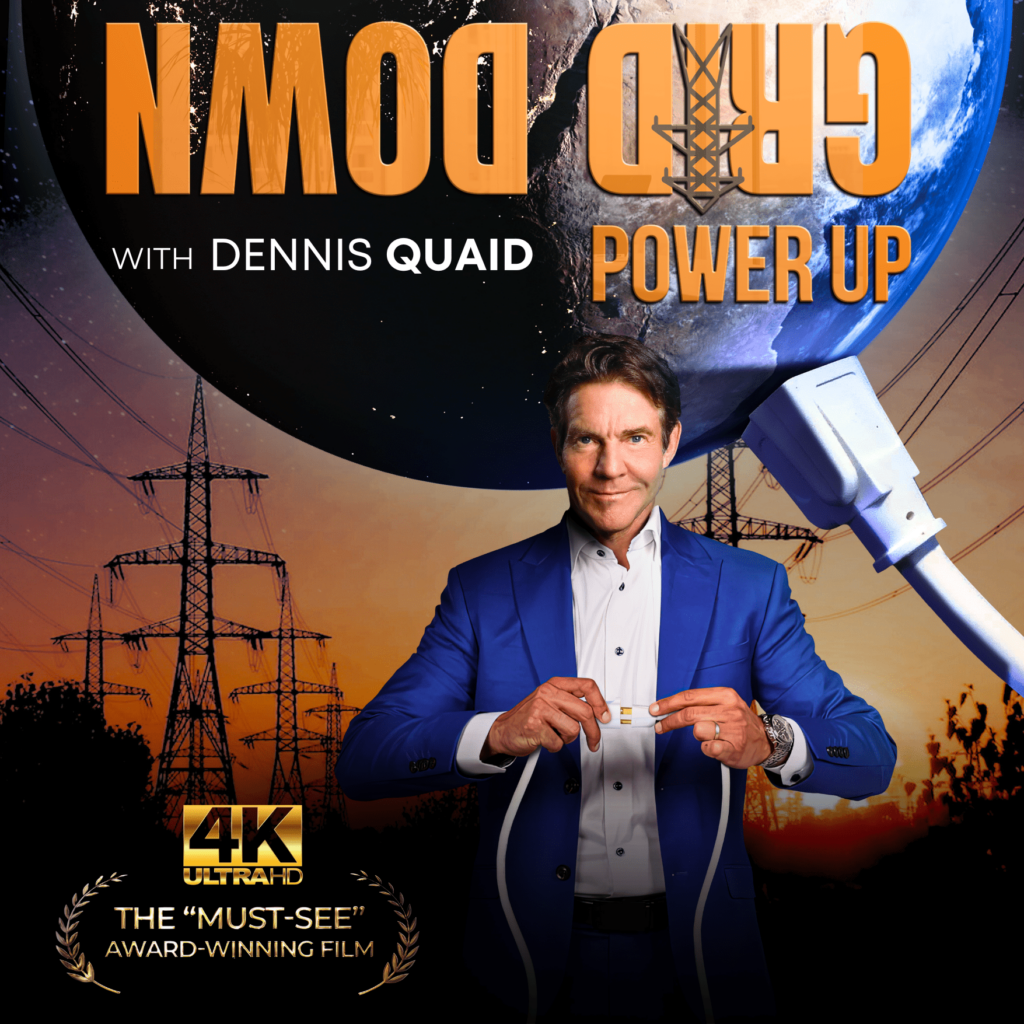
In an age where dependency on electricity is at its peak, ‘Grid Down, Power Up’ shines a spotlight on the essential truths we must confront. Our thought-provoking exploration will leave you captivated, and inspired to play your part in securing a resilient power grid for generations to come.
WATCH THE HIGHLIGHTS
Buckle down and power up with this series of shocking scenarios and check out the 8-minute exclusive first look available here for your viewing pleasure.
Watch Now
Watch the Highlights
Buckle down and power up with this series of shocking scenarios and check out the 8-minute exclusive first look available here for your viewing pleasure.
Why should you care?
Understanding America’s Power Grid
What the grid does
The electric grid connects power plants and other sources of electricity to homes, businesses, and essential services. Electricity comes from natural gas, nuclear power, coal, hydropower, wind, solar, and other sources. Transmission lines carry it over long distances; substations and transformers adjust voltage; local distribution systems deliver it to customers.
We depend on that network for drinking water and wastewater treatment, heating and cooling, food refrigeration and distribution, hospitals and medical equipment, fuel pumps and vehicle charging, communications, banking, and emergency response.
Why an extended outage is dangerous
A local outage lasting a few hours is very different from a prolonged blackout affecting a large region. As backup power and fuel supplies run short, failures can spread across water, food, healthcare, transportation, and communications systems. The human consequences depend on the outage’s duration and reach, weather conditions, equipment damage, and the effectiveness of emergency response. Large power transformers can be especially difficult to manufacture, transport, and replace. [1]
The threats we must address
Physical attacks and cyberattacks. Damage to critical facilities or interference with control systems can disrupt electricity delivery. [1]
Electromagnetic pulse or EMP. A nuclear detonation at high altitude can produce an electromagnetic pulse that may disrupt or damage grid electronics and other equipment across a wide area. Effects depend on the event, equipment vulnerabilities, and protection measures. [1, 2]
Severe solar storms. Geomagnetic disturbances, or GMDs, can drive unwanted currents through transmission systems, potentially disrupting grid operation and damaging some transformers. [3]
Severe weather and equipment vulnerabilities. Major storms and other natural disasters can damage infrastructure. Equipment security, maintenance, and reliable access to replacement components also matter. [1]
Who is responsible?
Responsibility is shared among utilities, grid operators, federal agencies, state regulators, and other public authorities. The Federal Energy Regulatory Commission, or FERC, approves and enforces mandatory bulk power reliability standards developed by the North American Electric Reliability Corporation, or NERC. Those standards include cybersecurity and physical security requirements. Local distribution oversight generally rests with state and local authorities, depending on the utility. [4]
In our view, government regulation remains less than optimal, handicapped by “regulatory capture,” in which regulators become too closely aligned with the industry they oversee. We call for clear accountability, measurable protection goals, implementation deadlines, and independent verification that safeguards work.
What we advocate
Protect critical equipment. Prioritize substations, large transformers, control systems, and communications. Deploy tested, appropriately engineered EMP and GMD protections suited to each threat; strengthen physical security and cybersecurity.
Keep essential services operating. Plan for extended outages at water and wastewater facilities, hospitals, emergency services, and food and fuel distribution systems. Verify nuclear plant shutdown and cooling capabilities, including spent fuel cooling, under prolonged grid loss.
Make recovery practical. Expand access to spare transformers and other critical equipment. Exercise restoration plans, secure backup communications, and plan for fuel delivery when normal transportation and communications are disrupted.
Build local resilience. Support microgrids and backup generation with appropriate protection, fuel or energy storage, and the ability to operate independently during an outage.
Require results. Strengthen and enforce protection requirements where gaps remain. Use legislation, regulatory action, and funding to turn demonstrated solutions into verifiable protection.
[2] U.S. Department of Energy — CESER Electromagnetic Pulse Activities https://www.energy.gov/ceser/ceser-electromagnetic-pulse-emp-activities
[3] U.S. Government Accountability Office — Protecting the Electric Grid from Geomagnetic Disturbances https://www.gao.gov/products/gao-19-98
[4] Federal Energy Regulatory Commission — Reliability Explainer https://ferc.gov/reliability-explainer
Watch the Trailer
WATCH THE TRAILER
LOOK WHO'S TALKING
“The grid is something you probably don’t think much about until it goes out, which unfortunately is happening more and more in recent years.”
– John Oliver
“We have the tools to solve the problem.”
– Joe Rogan
About the Movie
Grid Down, Power Up

The Movie
Grid failure is a real and imminent threat, a devastatingly deadly occurrence leading to life-threatening shortages of heat, food, and water. If protective measures are not taken, we will experience catastrophic failures leaving citizens in states of starvation, death, destruction, and darkness for months. Reports released from Texas’ 3-day “snowmageddon” indicate a minimum death toll of 246, with some estimates climbing as high as 702. An outage of 1-2 years would lead to 10,000,000+ deaths. One thing is evident: the clock is ticking, and if nothing changes, the power may go out for good… WATCH THE MOVIE

The US Power Grid
Dennis Quaid hosts an alarming look into the potential of life without power. A dynamic legion of energy, economic, national security, and infrastructure experts fearlessly expose our most critical global threat: the vulnerability of our nation’s power grids. Together they inform the public of imminent threats and the infinite horrors in store from prolonged power loss. Buckle down and power up with this series of shocking scenarios. To learn more about The Grid visit our FAQ page.…WATCH THE MOVIE
The Utility Companies
The U.S. power grid is aging and already struggling to meet current demand. It faces a future with more people — people who drive more electric cars and heat homes with more electric furnaces. Our electric utility companies have not implemented sufficient precautions to protect our grid and are well aware of the dangers. Numerous readily available grid safety solutions exist. These viable innovations must be rapidly instituted to protect our grid against known threats and hazards. As the demand for grid protection expands, brilliant minds will undoubtedly develop even more innovative ideas to secure our grid and protect our power. Promising fortification concepts have been developed by wise executives and utility engineers who understand that strict guidelines and protection measures may (hopefully) become required by law. Consistent citizen pressure must continue to pass legislation requiring utility companies to implement existing protective protocols while encouraging them to forge further state-of-the-art safeguards. Our goal at ‘GDPU’ is to ensure the grid never goes down! We’ve taken the time to list examples of immediate/interim solutions and sensible steps to secure our existing grids while we push for developing reliable, resilient microgrids… Help Resolve This

The State and Federal Officials
Our state and federal officials understand the dangers of grid failure but haven’t successfully passed legislation to remedy the problem. Unfortunately, the current cybersecurity standards designed by “the industry” and “approved” by the federal government are dangerously insufficient. Their security standards lean towards negligence and apply only to the “bulk power system.” The current cybersecurity standards clearly state: companies are NOT required to seek detection, mitigation, or even removal of malware (like the virus Russia employed to terminate electricity in Ukraine and then implanted in our systems). Even more shocking: these standards do not protect against catastrophic cyber-physical threats such as “Aurora” and don’t apply to imperative systems that allow grid operators to control the flow of electricity. Federal regulators have long been warned about these severe deficiencies. We must continue to push and encourage the federal government, state legislators, and public service commissioners to mandate upgraded cybersecurity standards to protect our power grid…Help Resolve This

The Media
Recent attacks on substations in Washington and Carolina have put everyone on high alert as we have seen firsthand how easily and quickly things can go awry. The grid has become a popular news topic as many states, like California, have continued to report rolling blackouts during heat waves. In recent months, government officials and reporters alike have urged citizens to refrain from excessive usage, even suggesting people forgo charging electric vehicles to reduce stress on the grid. See the most recent news about grid attacks and the grid in the media check here.

THE STORY BEHIND ‘GRID DOWN, POWER UP’ THE DOCUMENTARY:
Three years ago, Texas resident David Tice discovered a documentary in progress illuminating the grave risks and associated outcomes of a complete power grid collapse. After the initial shock, he took action to carry the production to completion. Grid failure is a real and imminent threat to our modern way of life, a devastating and deadly occurrence that recently “hit home” as outages ravaged Texans in February 2021.
Disaster struck our grid as three severe winter storms swept the United States, triggering the worst energy infrastructure failure in Texas state history. This incident ultimately led to critical, life-threatening shortages of heat, food, and water along with rolling blackouts affecting more than 4.5 million businesses and residences over several days.
A final report released from the Texas Department of State Health Services concluded that a minimum of 246 fatalities occurred with some estimates climbing as high as 702. The documented causes of death included: house fires, automobile collisions, drowning, hypothermia, and carbon monoxide poisoning as citizens desperately fought to survive the loss of power. According to officials at ERCOT, Texas’ power grid was “seconds and minutes” away from a catastrophic failure with the potential to leave residents in darkness for months.
After much consideration, David took matters into his own hands. When asked why, he stated: “The human brain does three things. It remembers the past, builds connections, and creates ideas for the future.” The shocking realization that humans have become so reliant on power to survive sparked the initiative to release this electrifying documentary while connecting with fellow energy warriors like Senator Hall. “We are here to kindle a movement and fix this problem.”
In the midst of research and investigation, one thing became abundantly clear. Natural disasters and weather phenomena are only one facet in the frightening scope of future failures. An orchestrated physical attack, electromagnetic pulse (EMP), cyber-attack, or geomagnetic disturbance (GMD) could shut down our electric grid for a year; or longer. This is a Global, humanitarian issue, not a political one; if something is not done, we will inevitably find ourselves in the dawn of a new Dark Age. Watch “Grid Down Power Up” for more information to understand how you can help solve this problem and protect our power. WATCH THE MOVIE
Join the movement to protect our grid
The Filmmakers
THE FILMMAKERS


The C-Suite Network
Energy Security CounciL
A community of citizens, companies, utility organizations, and elected officials, with a common goal in mind - to make our vulnerable national electric grid more secure.